Showing posts with label conversation4action. Show all posts

Tuesday, August 5, 2014

Lessons From a Scarred Tomato

The scarred yet sweet & juicy tomato
This is a special tomato. 

"Why would such a blemished and imperfect tomato be special?" You might ask. Let me explain: This tomato is special for the simple reason that it’s picked from our garden. I grew it. Planted in early May, we gave it TLC for three months till harvest time in August.

I wouldn't buy this tomato or any that looks like it. I spend time poring over produce at the grocery store to ensure no blemished fruit or vegetable makes it to the counter with me.

For one, fresh produce is expensive and whatever we buy is meant to last a while, sometimes for several weeks, and the scarred ones won’t. Even when we intend to use them quickly, the mere task of cutting off the scarred parts seems like too much work. While grocery stores go to great length to ensure only perfect produce is displayed, picky shoppers still take time to skip even the most of superficial scars.

I brought this tomato in and it did not even for a minute occur to me to throw in out. “It’s mine and it’s organic.” I reasoned. Plus, I know that after cutting out the scarred section, it will blend in and be unrecognizable among others in the salad.

This got me thinking about faults and weaknesses. People's everyday weaknesses or annoyances [I am not talking about drama, which I prefer to keep it out of my life]. We’re very quick to see fault in others - be it family, friends or colleagues. Regardless of the depth of the fault, we tend not to care that the fault could be as a result of their circumstances and/or previous experiences. After all, these contribute to molding our character.  Once we identify in others something that displeases us or makes us uncomfortable, then we rush to judge and dismiss. “She’s not my type” or “he’s just too complicated” or they are just “too challenging to deal with”, are some of the arguments we front to justify disengagement from people we should care for and who generally need more care than most.

When we do this, we throw out an opportunity to be human, to show kindness, to forgive and to be an example to others. We shut the door to being vulnerable with others; an important ingredient for friendship and close family relationships. Instead of covering others or helping them cut out faults, we expose their difference, their lack and weakness. We distance ourselves from those we perceive to be weak and different.

This is classic human hypocrisy since as we are judging and criticizing others, we fail to see or acknowledge our own weaknesses. Consequently, when we do acknowledge it, we’re rather quite forgiving of ourselves and want to make others believe that it was a rare mistake or a judgement error and that we’re good most of the time. We also promise to improve ourselves.

Drawing from Scripture, it appears that Jesus was not impressed by the “clean and righteous”. Rather, He identified and reached out to the marginalized, the ones that society had kicked to the curb. The sinners and imperfect were his closest; whom He chose, engaged in conversation and shared meals with. Those are the ones we too should seek out.

Remember, after I cut out the blemish, the salad tasted just as delicious.

Friday, June 20, 2014

Delicate Northern Summer Blooms

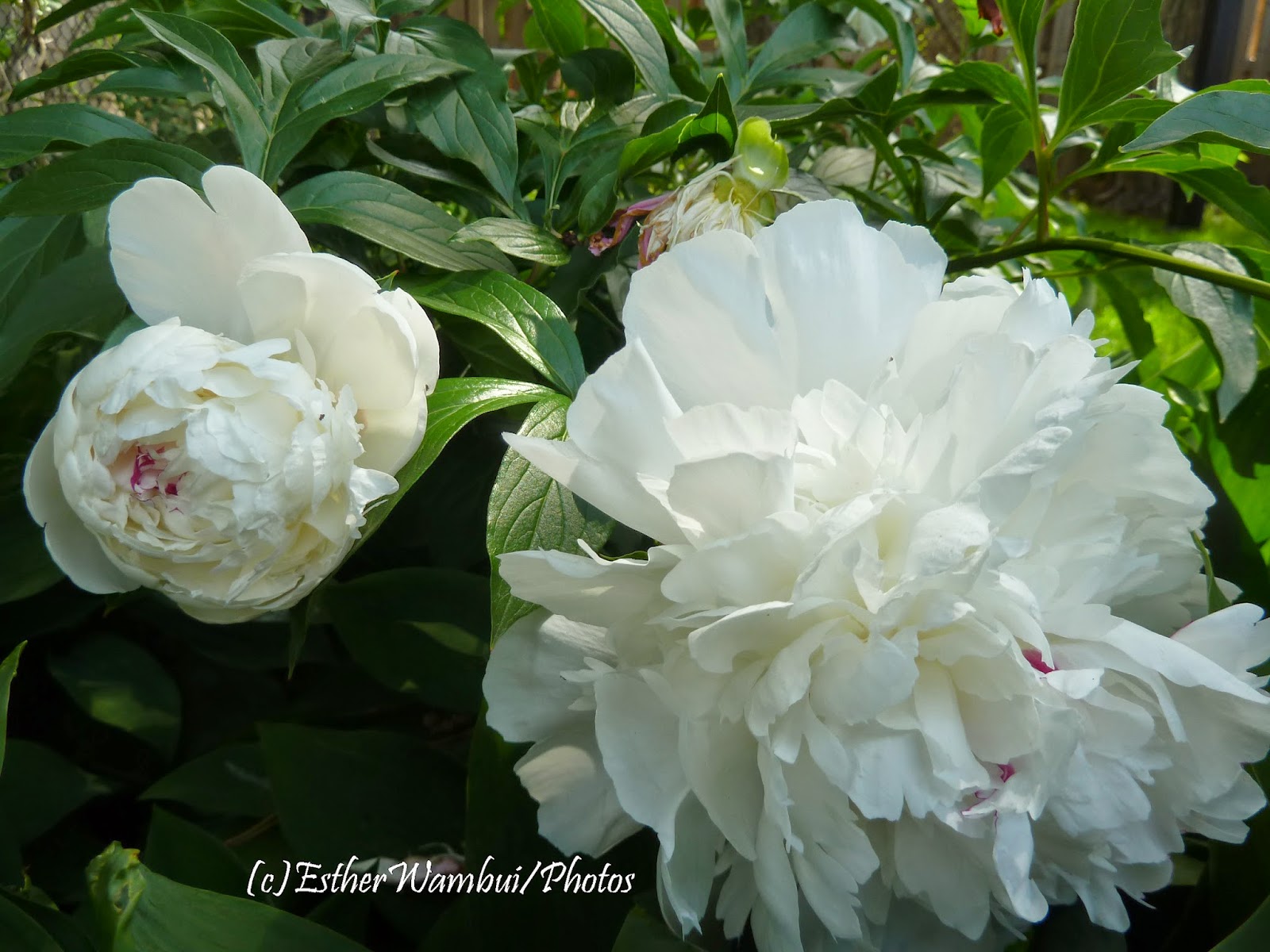
A pair of fresh & beautiful white peonies

These light pink peonies appear so fresh in the morning.

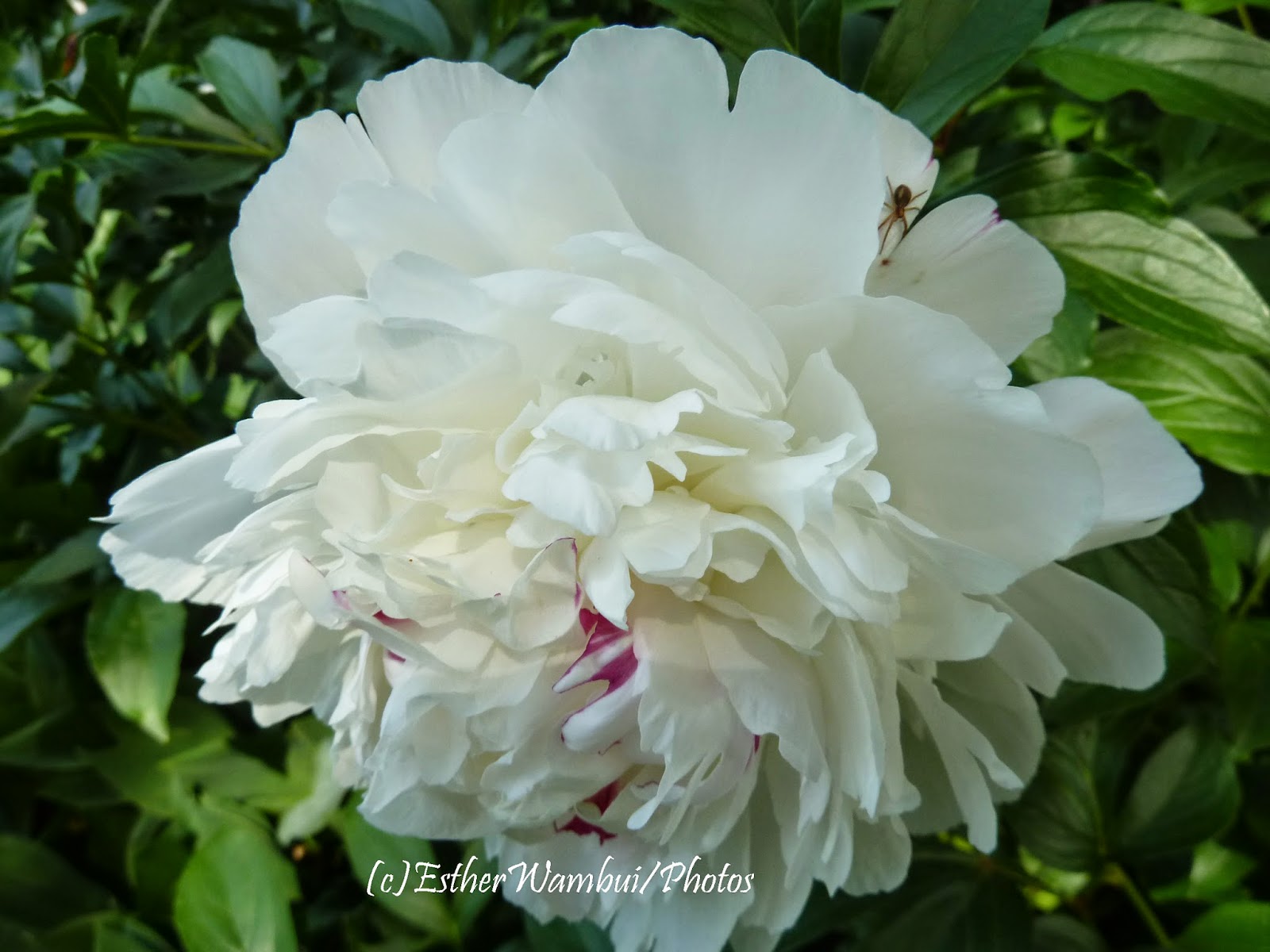
The tiny spider webbed a home in these beautiful surroundings

Peonies are delicate and don't bloom for long and this hot pink one seems to die up first.

Thursday, May 29, 2014

Basking in the Agony of Spring

Spring is here or to be more cliché “spring has sprung”.


I always look forward to spring. Living in the North makes you constantly watch for those first buds. It is pure bliss and radiance when they appear, yet with it comes the agony. Allergies - the sniffles, itchy throat, watery, red eyes, etc. The worst part is, while sometimes the allergies last for just a couple of days to a week, it can sometimes stretch for weeks on end. Sometimes the allergies outlasting the season, stretching into summer.

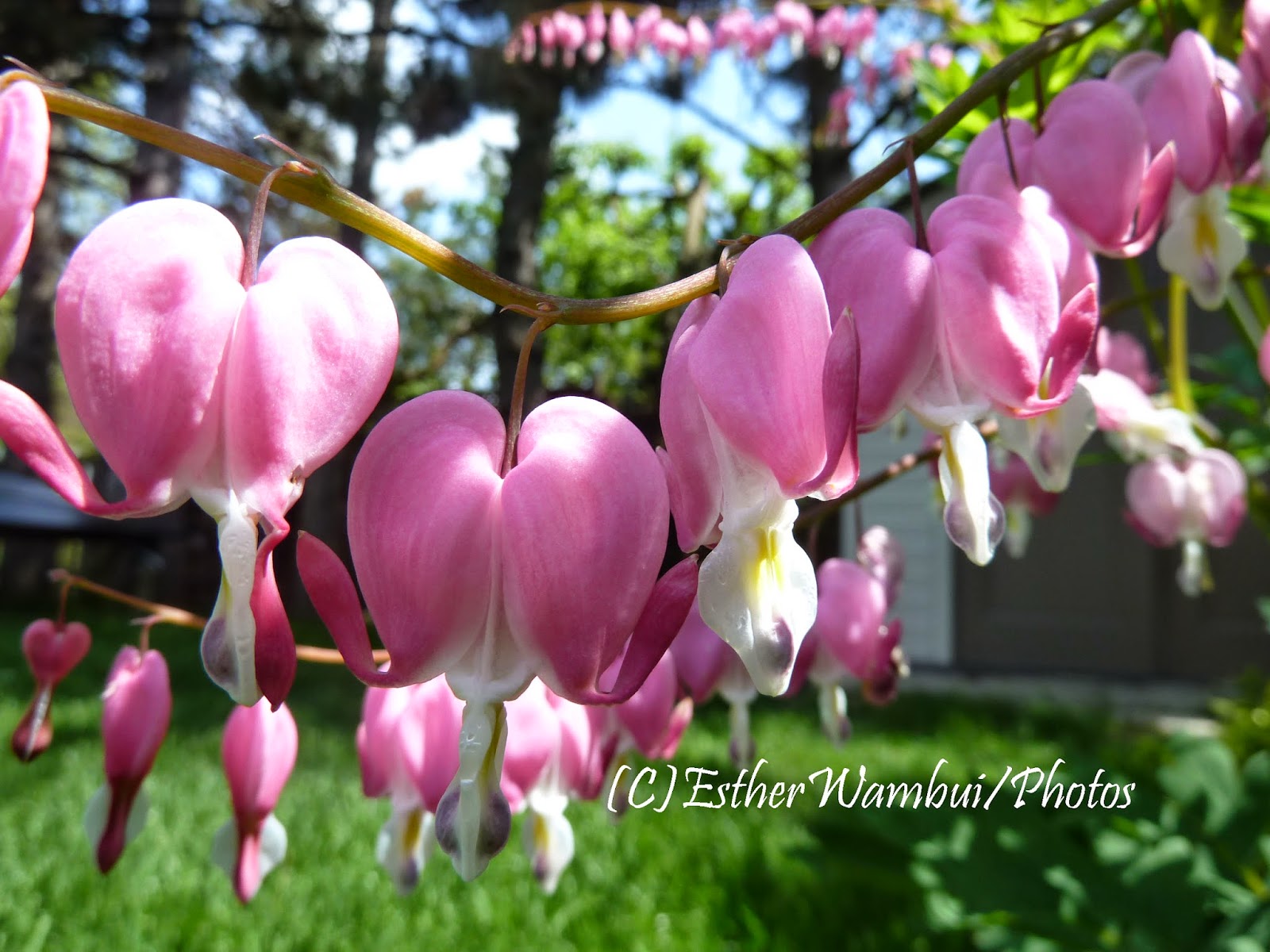
Bleeding Heart: Could there be a more appropriate name?
Still, I never wish spring away. Its cool temperatures, colourful & vibrant beauty coupled with enticing scents make it worth all the discomfort. I don’t have allergies severe enough to require anti-histamines but I constantly need eye drops. On calm, less windy days, I can generally enjoy the outdoors.

Lilly of the Valley: A Spring delight that smells as good as it looks.
Let’s enjoy spring before the Fall allergies send us rushing back indoors.

Tuesday, September 25, 2012

Wildfires Plague Ecuador

I have never been happier to see the rains come. Disregarding etiquette and discomfort to my neighbours, I cheered loudly, thanked God and walked a little in the rain to celebrate the relief. It has been very dry here. There has not been a drop of rain for months and Ecuadorians have taken to looking into the skies daily for a sign of darkening clouds.

The summer of 2012 brought devastation to Ecuador with fires double the average for the period in the South American country.  Thousands of hectares of forest have been burned since a series of fires started in the province of Pichincha, according to the country's Ministry of Environment.
So far, forest fires have killed five people and left 73 injured, consuming hectares of woodland, scrubland as well as crops. In all it was reported that there have been more than 3000 wildfires since June 1, when a period of drought set in.

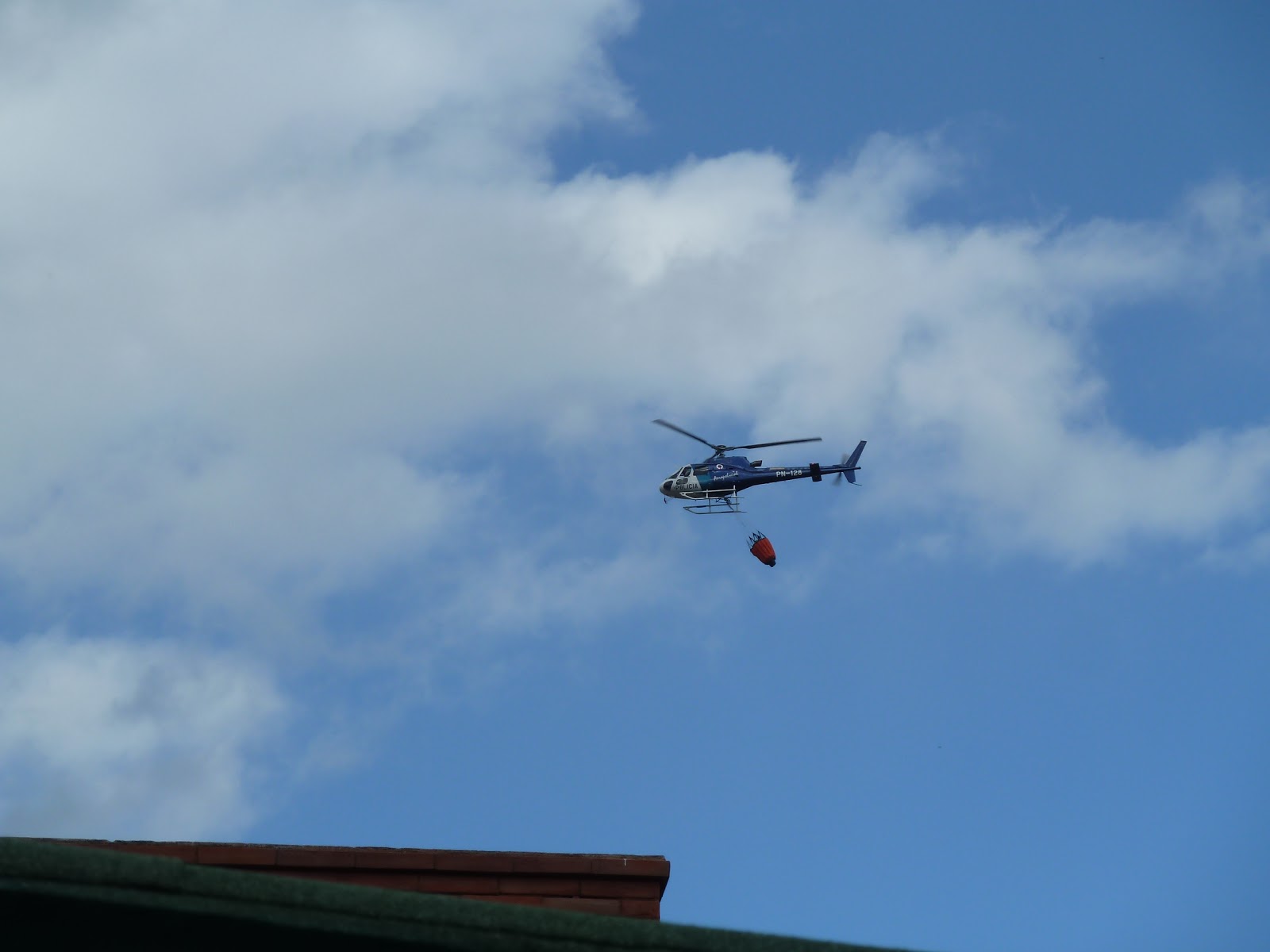
A police chopper on duty
EstherWambui/Photos
Military chopper on fire-dousing duty
EstherWambui/Photos
The most affected provinces were Pichincha [where I live], Azuay, Bolivar, Chimborazo, Cotopaxi and Tungurahua.
The Ecuadorian armed forces deployed aircraft; helicopters and planes, as well as soldiers, to fight the fires. Even neighbouring countries including Brazil, Chile, Colombia and Costa Rica have sent in crews to help extinguish the flames.

EstherWambui/Photos
EstherWambui/Photos
EstherWambui/Photos
Although most people living in the Suburbs have not been directly affected by these fires, the constant smell of burning wood and billowing smoke from all directions has been hard to ignore. I have been constantly also reminded of the fire by the frequent sounds of helicopters flying above my place. I happen to live by the valleys’ only reservoir, where helicopters came by the minutes to collect water.

Ecuador’s topography, which is mostly hilly and mountainous, made it very difficult to quickly douse the flames and evidence of the fire is everywhere you go. Hopefully, with the rains, new vegetation will cover the blackened hills and forests and clean the reminders of a painful summer.


Link to Video: http://www.youtube.com/watch?v=XlTvFoLGI-U

Sunday, September 23, 2012

Ecuador Summer 2012 Wild fires

http://www.youtube.com/watch?v=XlTvFoLGI-U

Ecuador is experiencing devastating forest fires. According to news reports and anti-disaster officials, there have been 3069 forest fires since June 1, when a period of drought set in. The fires have wiped out 17,484 hectares of woods and scrubland high in the Andes as well as 142 hectares of crops, while another 31 hectares of crops were affected but not completely destroyed.


At this reservoir in Cumbaya, Quito, water bombers fill up for their seemingly unending task.

Sunday, April 8, 2012

Easter in Quito – No place for Easter bunny or eggs

Pictures by Essie & M Futkowski. 
Easter and Semana Santa is a good time to be here as it is packed with religious, cultural and art events. Unlike Christmas which I found a tad bit too bland, the Holy week is far more emphasized and the best time to experience an elaborate outward expression of the Christian faith and Catholicism, imbued with elements of Andean culture. Semana Santa, my second in Ecuador, begins on Palm Sunday with the blessing of the palms and ends on Easter Sunday with a solemn mass of the Lord’s Resurrection.


The statue of Black Jesus
Cucuruchos march on
A penitent adorned with barbed wire
Women penitents take part in the
procession

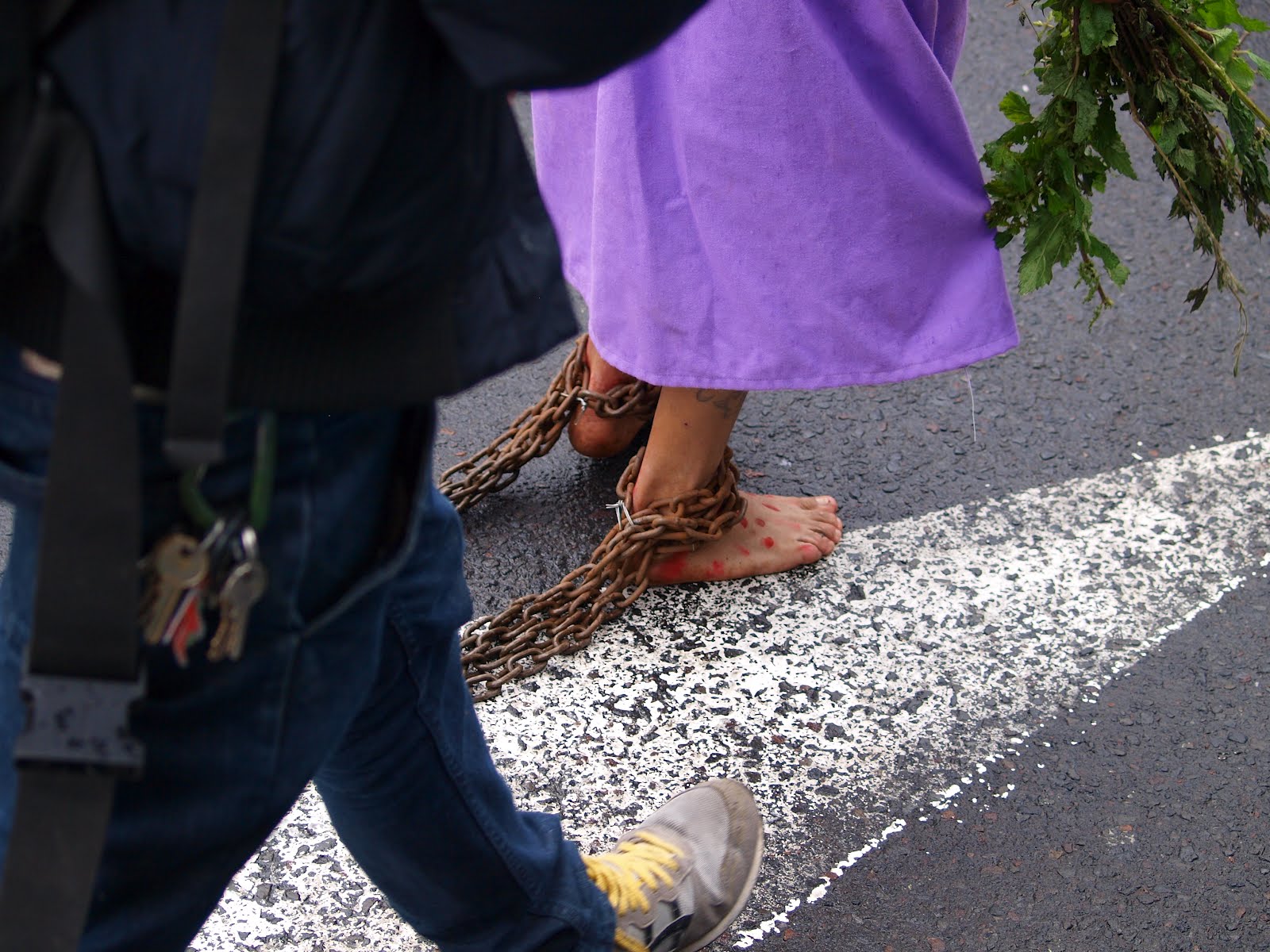
The heavy chains
 The highlight of the week is el Jesus Gran Poder [the Almighty Jesus] Procession on Good Friday. Although a Christian, this was for me a very different and moving experience. The Quito procession is the second largest Good Friday procession in the world, second only to Seville, Spain. Here I saw Ecuadorians physically manifest Christianity. I saw and felt an almost tangible faith on the faces of young and old, men and women who whole-heartedly embrace their faith.

As it does each year, the procession began and ended at the San Francisco Cathedral with thousands of citizens dressed in distinctive purple costumes, some, cucuruchos, wearing conical pointed hats. A band led the procession and several other bands throughout the procession played sombre music, mourning Christ’s passion.  Faithfuls gathered and walked, majority in bare feet. Robed and masked men, women and children carrying religious artifacts [crosses, candles, rosaries, pictures of Jesus, etc.], walked the four mile route.

One of the designated Christs caries a
giant cross - he occasionally needs help.
Among the penitents walked tens of designated “Christs” carrying such huge wooden crosses that they ocassionally needed help from others especially to walk uphill. Some people walked with their children, who seemed all too eager to take up the tradition.  Spectator family members and friends stood by the sidelines, occasionally shouting an encouraging word or passing a chilled bottle of water to the penitents. Smaller groups of women, whose costumes included a veiled face, marched in the procession as well.   

As part of the costume, these legions of faithful penitents carrried thick ropes around their necks, some carried smaller crosses and crucifixes, some wore barbed wire around their torsos, while others dragged heavy chains tied to their ankles. Some walkers carried signs asking [praying] for mercy and I saw a number of people on wheelchairs.

Yes, that's unshaved cactus. Ouch.
Two prominent guests of the day are greeted with cheer and praise. The famous statue of Black Jesus which resides in La Compania [the all gold interior Cathedral] and the statue of the virgin [I have to confirm the name], which were carried in the procession.

Including children in the celebrations
is one way to ensure the tradition
lives on. 
It’s also business time during the procession. Vendors walk up and down the streets shouting; “paraguas, caramellos, dulces, agua potable,…” above the music and loud speaker notices, trying to sell their wares - umbrellas, sweets, sugared corn treats, chips, fruit, bottled beverages and even plastic stools for people who can’t stand for long periods.

Such religiosity may not be everyone’s cup of tea. But for me, this outward expression of deep faith was a very humbling experience, as it totally centred on Jesus Christ as the pure reason for Easter. I also liked seeing uniformed policemen proudly take part in such a religious procession. Guess it’s not a big deal in a country that is 95% Catholic and most people wonder what if anything at all, the Easter bunny has to do with this special and holy week.
 
It’s time for some fenesca, the Ecuadorian Easter soup.
** Fanesca is a special Ecuadorian soup served only during the week leading up to Easter. It is an elaborate, rich soup made with 12 different beans and grains (to represent the 12 disciples). Salt cod (cooked in milk) provides the protein, since this soup is consumed during Lent, when many Latin American Catholics abstain from eating meat. It's usually served with fried plantains, hard boiled eggs and empanadas (floating in the soup or on the side)**.


Thursday, December 29, 2011

Merry Christmas from Ecuador

Christmas Day in Ecuador is a day for family, and exchanging gifts is very important. Actually, one of the first items to appear on supermarket shelves is an assortment of gift baskets of various sizes that employers ‘are expected’ to buy for their workers. Contents range from a bottle of wine, to cooking oil, rice, spices and other food items. 

Having decided to remain in Ecuador for Christmas holidays, I was rather eager to experience their celebrations. In Quito, my friends told me that festivities tended to be personal and although traditionally religious they incorporated civic celebrations as well.

My pesebre.
Early on in December you start to notice nativity scenes called Pesebres [sometimes clothed in traditional Ecuadorian costumes] erected in various locations including parks and church compounds. These are very elaborate and in fact for most homes, pesebres take the place of a Christmas tree. I made sure to get myself a pesebre. All around in parks and plazas [town squares] people hold Novenas, which are public gatherings where people perform religious hymns and prayers.
Christmas Eve is Nochebuena, and families gather for dinner [cena de Nochebuena] which may traditionally include  turkey or chicken, salads, fruits, selected cheeses, rice, wine or the local drink chicha. I had a turkey cena de Nochebuena with a lovely Polish-Ecuadorian family, which was prepared by a black Colombian maid [interesting demographics here].  I did not attend the midnight Misa del Gallo, the Christmas Eve mass, which I later learnt is the highlight of the Christmas prayers.   


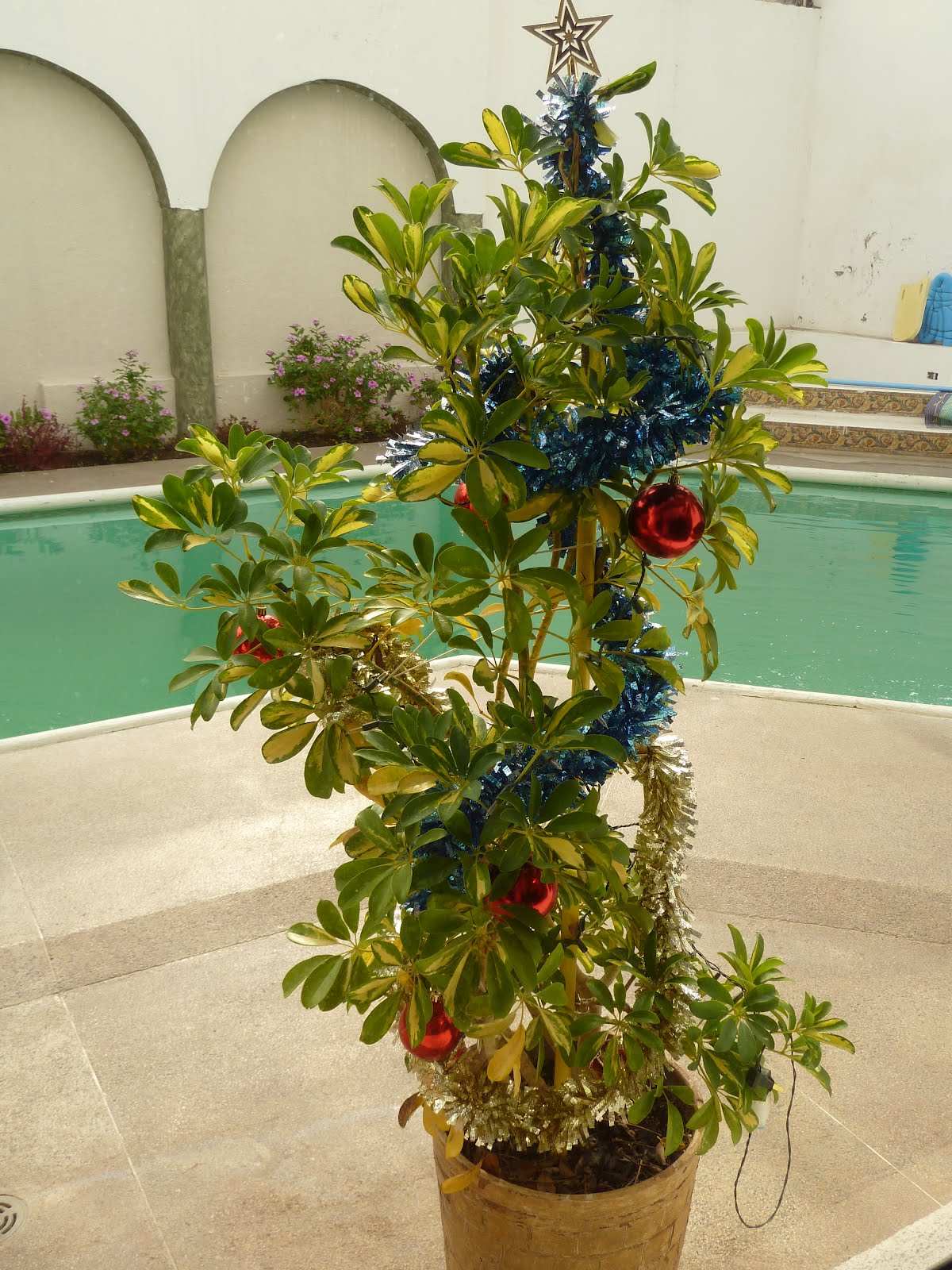
We turned this house-plant
into a christmas tree. 
Christmas Day as I pointed out earlier is a family day, to visit and exchange gifts. Had I really understood this, I’d have attended the Misa del Gallo and avoided the disappointing, sleepy Christmas day service. We even tried mass in two different churches, hoping for ‘vibe’ and life, but we found rather ‘ordinary’ rushed services, with more empty pews than not, of sleepy-looking people. It didn’t feel very Christmassy.

Most Ecuadorian homes I’ve been to have a shrine, adorned with flowers, candles and statues of Maria and baby Jesus. During the Christmas mass, I noticed that most people brought their baby Jesus to the church for priests to anoint/bless with holy water.

I will travel to the coast for New Year’s and though I feel like I’m leaving the festivities behind I am looking forward to a few days of warmth and quiet. Mompiche is a very small town.

Thursday, December 15, 2011

Chumillos-Images

Clare Fitchett shares Candy with kids
we met along the way

The Beautiful landscape

Breathtaking, Ecuador is


Plenty of grazing land for the sheep
Reminds of of my uncles farm in Nyandarua,
Central Kenya

More beauty

The Kids sit quietly observing the
Proceedings

Calves tethered by the roadside

Linda Kolodziej, Kyung Whitaker and
I take a photo moment with
some local women

Monday, December 12, 2011

Santa Came Eearly to Chumillos

On the Saturday morning of December 10th, a bunch of Canadian expats and/or their spouses drove to the mountain village of Chumillos in a convoy of four cars packed to the brim. We were on a mission to deliver Christmas gifts to the villagers and the gathering point was at an elementary school called Carlos Iguamba Andrango. Sharing during Christmas brings tremendous joy to many and makes the celebrations all the more special, and this is why these Canadians have done this every year since they've been here. The Canadians had collected cash and our Ecuadorian friend and secretary Susana Gallardo had organized the buying and packaging; of clothes, food baskets, toys upon loads of children toys and lots of candy and biscuits. I was really excited. This was going to be a fun day.

Road sign to the school
We had been warned to dress warm as it got quite cold up in the mountains and the weather could change drastically.But the heavy jackets and boots turned out to be unnecessary. The heavens were smiling down on us and it turned out to be a beautiful sunny day. Driving up those picturesque mountains was as it is often here, a relaxing photographic, joy ride. All the way up were homes scattered here and there, cows, sheep, donkeys and an ocassional horse grazed everywhere and chickens ran around. And as is typical of Latin America, there were dogs of every size and species everywhere. Men, women and some children worked in farms of corn, potatoes, peas and beans. Being in Ecuador’s farming communities always makes me nostalgically think of Kinangop or Nyandarua, places in Kenya with similar climate and crops.


Offloading the gifts
Along the narrow and winding road that chilly morning, we met groups of children whom we stopped to give some candy to. On arrival at the school, we found our contact guy waiting and within minutes people started trickling in from all sides of the mountains. They must have seen the cars drive through the mountains, as well as the power of cell phone. In about half an hour, it seemed the entire village was in attendance. After a short general introduction, we began distributing presents starting with the children, bags of clothing, and finally on to the food baskets, one basket per household.  


Chatting up some shy kids and   
sharing candy as we await others.
The joy of giving for us was tremendous. The boys particularly were overjoyed with the soccer balls. The women too smiled shyly as they quietly chatted amongst themselves, huddled together against the morning chill. But all in all, it was a rather quiet affair. If you’ve been to any part of Africa, you know what I’m talking about. I’ve observed that Ecuadorians though very open with their emotions are rather quiet on gratitude and appear to be reluctant receivers.  Observing them, it appeared to be just another day for them and I couldn’t help but think of the song, dance and clapping that would have come with such an occasion anywhere in Africa. But then again, we’re different peoples with different cultures. We went back home fulfilled, hoping we had given someone a reason to smile this Christmas.
Sunday, December 4, 2011

December 6 and Fiestas de Quito

On Thursday last week, one of my classmates asked me if I liked chivas. I didn’t know what that was so he explained that chivas are the brightly decorated open "party" buses that I’ve been seeing all around town lately. These buses run along the city streets with live bands playing and people riding around on them in a festive mood; dancing, singing and shouting "Viva Quito"!

In December, Quito, the capital of Ecuador, celebrates its "Spanish Foundation" by the Conquistador Sebastian de Benalcazar on December 6, 1534. The partying starts one week before and everyone I meet wants to know if I’m taking part in any Fiesta de Quito.

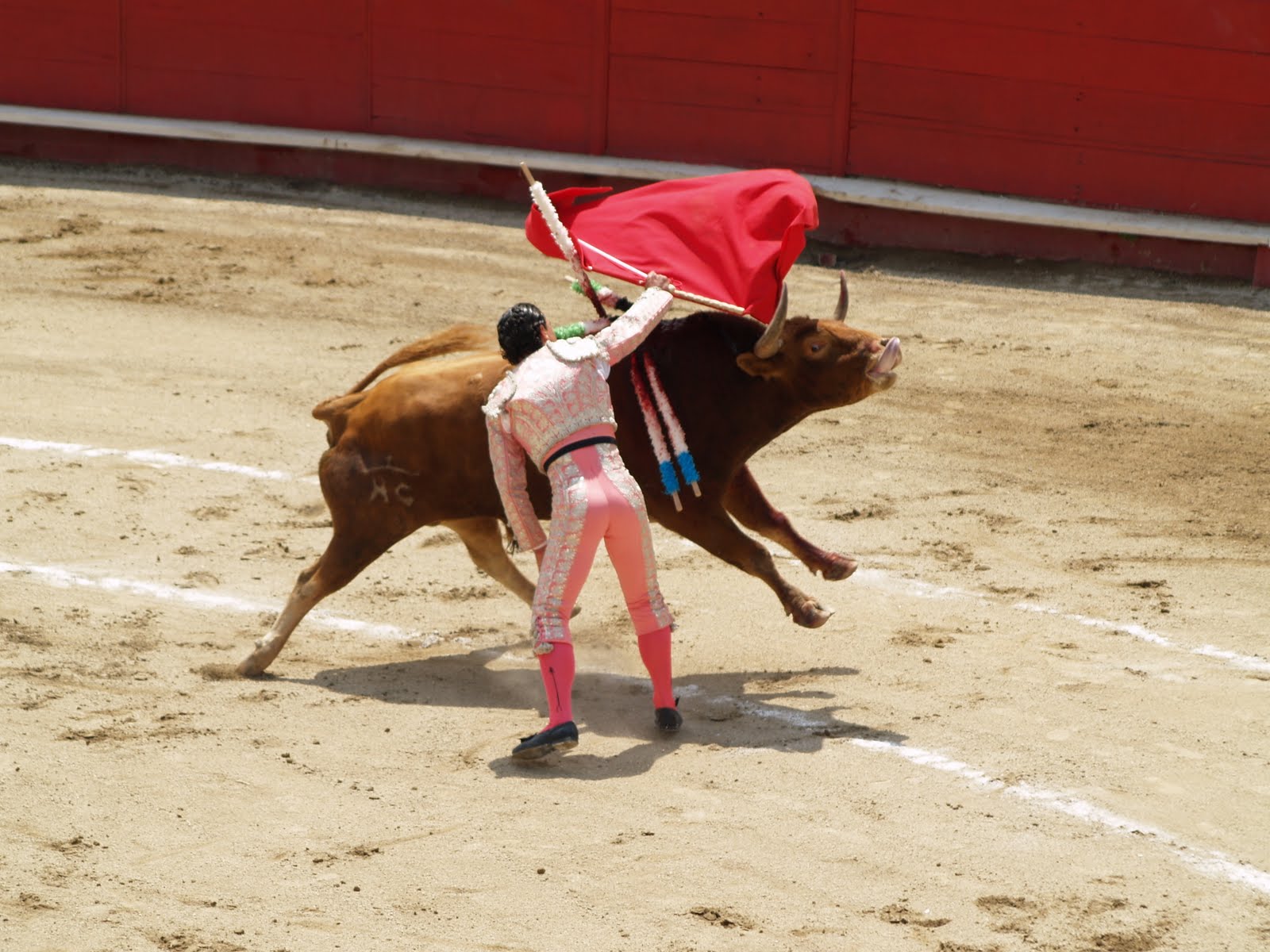
A central event during this celebration is the bullfights, which boast participation of both local and international matadors. Bullfights for this year are already on at the Plaza de Toros de Quito, and I’ve been advised to avoid that part of town owing to huge crowds. There are also flamenco dances, [I’m supposed to attend one] and people all around seem to be enjoying long lunches, dinners and city walks.


Top: Picadores observe the proceedings, while below, matador and bull fight it out at the Plaza de Toros de Quito.
Photos by Mirek Futkowski 
The different barrios or neighbourhoods organize dancing in the streets, mostly featuring live orchestras. People come in groups of friends or family, to socialize, listen to the music, dance and drink the famous canelazo, a hot drink made with water, cinnamon, sugar and firewater. I’m told that the night of December 5th is an all-night event.

There are also parades that traditionally take place in different areas of the city, with the participation of music bands and dancing groups from different schools in Quito. Many cultural events tailored to keep the traditions of Quito alive also take place during the week. These include folk dancing, recreation of legends and traditions, art exhibitions, food festivals, and fireworks.

During this time people of all ages get together in homes and public places [I see them at street corners] to play an Ecuadorian card game called "cuarenta" or “40”, since it is played with 40 cards. The World Championship of Cuarenta takes place as one of the highlights of the festivity.

What an exciting time to be in Quito!

Note: A picador is a horseman who pricks the bull with a lance in the early stages of a fight to goad and weaken it

Thursday, December 1, 2011

Ecuador: HIV/AIDS

This small Andean country with a population of about 15 million people has a concentrated HIV epidemic, with approximately 0.4 per cent of adults infected. Quito, the capital city has an estimated prevalence of 19.3 per cent. The rate of infection is said to be steadily increasing.

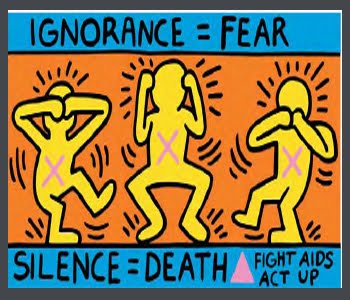
Image courtesy of Women News Network
Ecuador HIV statistics: People living with HIV -37,000; HIV prevelance - 0.4 per cent; Deaths due to AIDS - 2,200. With such relatively low rates compared to other countries I've lived in except Canada, it is no wonder that I found World AIDS Day rather unacknowledged here. Nevertheless, I still think we are far from achieving an AIDS free generation around the world.

Read the piece I wrote on June 5th on how misconceptions about antiretroviral drugs may be fooling people into not taking enough precaution to prevent HIV infection.

Stay safe and have a happy December.

Saturday, November 12, 2011

11/11/11 was a memorable day, except not for something worth remembering

Someone asked me what I’d do to make 11/11/11 memorable. I had no idea since I wasn't doing the expected like having a baby or a wedding. All I knew then was that it was a Friday, my day off, and I could do the special but repetitive things I do most Fridays. Go for a morning run, Skype and later join some girlfriends for a coffee. I even received an email from a journalism community asking if I wanted to document the day in any form. I didn’t have time, so I declined. But now, I’m forced to document something that doesn’t need time creating or researching. I call it my official “induction into Quito”.

On Thursday Nov 10th after my classes I went out for a coffee with a friend. She had cancelled our date on “The Day of the Dead” and she wanted to make it up to me. So she picked me up after my lesson at 8pm and we headed off. We debated staying in, but she felt that I haven’t had a chance to see Quito in the night [I live just outside of Quito in Cumbaya], and she wanted us to eat at one of her favourite spots. She’s an architect so she thought to take me to a place where the decor is as impressive as the food.

From this point on everything goes lighting speed or in slow motion depending on my mind. We went to La Mariscal, the tourist centre of Quito [locally known as ‘gringolandia’] and it was buzzing. I don’t particularly like this area and crowds just enhance that feeling, so I was happy the restaurant we went to only had a few patrons. We sat, and made our orders, starting with the amazing fresh fruit juices they serve here. I asked for a moraa/Guanabanna [soursop/blackberry] mix.
Guanabana fruit on sale at a roadside stall
EstherWambui/Photos

All this time, my handbag was on the edge of my chair on the right, and my jacket hung at the back of the chair. I remember going to the bathroom to wash my hands, coming back, and getting some hand cream from the handbag. A few minutes later, I wanted my lip balm and as I stretched my hand into the bag, I hit an empty space. I thought my handbag had fallen, but at the same time I thought I should have heard or felt that. A few seconds later, and one look under the table and I knew my handbag was gone. A friend’s purse had been stolen the same way and I’ve heard her story many times.

Here is the story as recounted by the only waitress who saw the thief. Apparently, an attractive young woman with dark hair [as if that were some unique feature in Ecuador] had come in a few minutes prior and sat at the table behind me, facing me, meaning the farthest place from me. I didn’t even know she was there. She ordered a glass of water and a few minutes later, she told the waitress she had to go call a few friends. That was it. All I ever “saw” of her was the solitary glass on the table, and the last I saw of my beautiful red handbag and all its contents; both valuable and sentimental. I can replace most of what was taken except a few weeks of lecture notes on the voice recorder and all my press cards, from three countries. In Quito you learn to never carry important documents on you, but unfortunately misfortune pounced on the day I had taken my documents to make photocopies.

On this memorable day of 111111, I lost a ‘little bit of myself’ with the loss of my handbag, and in the process, my love affair with Quito was prematurely tainted. But in all that I’m thankful to God that I wasn’t harmed at all. Some people I know here haven’t been so lucky. I strongly believe the thief had some help from the waitress either getting my purse or getting out of there without anyone noticing including my dinner partner who was facing that side.

Loosing my entire handbag with all the items in it has taught me a lesson about what is really valuable in life.

Tuesday, November 1, 2011

It’s the day of the dead in Ecuador, but maybe only for the long dead

November 1 is "Dia de los Difuntos" [Day of the Dead] here in Ecuador and most of Latin America. This is a time of respecting and remembering the people who have passed away. On this day, family and friends gather together at cemeteries to honour those who have died, with love and laughter. They make "guaguas de pan" or bread people and a special blackberry juice called "colada morada". Then they eat and drink together “sharing” with their ancestors.

"guaguas de pan"
Photo Courtesy of Regina Marchi
This is a major holiday in Ecuador, and it so happens that tomorrow is the celebration of the founding of Cuenca [city], and in observance, all schools and businesses are closed, giving us a five-day holiday.

I am told that on the Day of the Dead, entire families, particularly in rural areas go to the gravesite to clean graves; they pull weeds and whitewash or replace crosses .In urban or wealthier areas, this would involve unlocking the grates, whitewashing tombs, and placing fresh flowers and religious cards.

This is a day I definitely wanted to experience with the locals, but it did not happen. Initially, I had two options. Either travel into the country for a ceremony at a friend’s ancestral home, or go to a cemetery just outside of Quito with another friend. I chose the Quito option. But early in the morning, my friend said she couldn’t go because her mum didn’t feel well and they wanted to stay home. That was it. I was going to miss out on this one because no matter how brave and adventurous I am, I would feel very creepy observing complete strangers remember their dead family/friend. It may also be intrusive for them, particularly since I couldn’t resist taking pictures.

Lots of families gathered inside a cemetery
Photo courtesy of chanatrek.com
Later, I talked to my friend whose mum had been unwell. And here is the story. Last weekend, a death hit too close to home. One of her mum’s closest friends had suddenly died of a brain aneurysm; a healthy woman in the morning, gone by afternoon. So she explained that for her family, there was little to celebrate on this Day of the Dead.

This got me thinking: It may be okay to joke and laugh about the good and the bad of our long dead relatives, but it's very hard to do so with the recently departed. I remember as a child minding how loudly my grandfather spoke. Yet, I remember my long gone grandfather with fondness, and ponder at how such a cynical person could be married to the sweetest woman I know. I can look at his picture and smile at his very tall frame always clad in shorts and a trench coat, despite the weather.

On the other hand is the recenty departed. Earlier this year, I lost my eldest brother-in-law and a short while later a mother-in-law passed on closely followed by one of my closest friends. The pain of their loss is still very fresh to all who loved them. I know their families and close friends are still grieving, still unbelieving and daily waking up to another day of life minus their loved ones.

I’ve always resented that some cultures treat death like total end, a fullstop to a life; walking away after the funeral, never to return. But I am also learning that celebrating the dead doesn’t mean all dead. It means those that we have buried and allowed to go, those with whom we have created a little distance. It means the ones whose memory brings a smile to our face instead of unbearable pain, indescribable grief and fresh tears to our eyes. Often in this life, our loved ones die and it appears they always die too soon. Therefore on this day, I choose to celebrate my loved ones while they are still physically around.

In loving memory of Ndegwa Mwangi, Mama Karuga and Grace Muchonde.
Rest In Peace special friends till we meet again.

Sunday, October 30, 2011

An earthquake started off my weekend

When you move to a new country, you hope to become a part of them; their culture, their food, their way of doing things, generally, part of their good. I doubt anyone wishes to be caught up in the ugly; the poverty, disease, crime, prejudices and biases. In a new country, we want to attend more baby showers, weddings and if possible never have to be part of a friend’s funeral. We can be prepared, we can take precaution, but we can never be assured of unpleasant happenings. Natural disasters are such one thing and Mother Nature is a big part of the equation.

Shortly before 9 AM Saturday morning, during one of those sleeping-in weekends, I was woken up by the most violent shaking and my name being shouted out. I have felt the earth move twice before and so even in my groggy state I instantly knew that we were experiencing an earthquake.

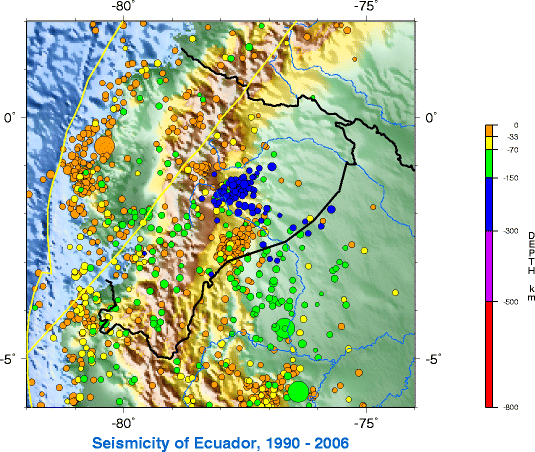
According to the U.S. Geological Survey, the Quito earthquake of October 29 was a magnitude 4.0 at a depth of 3 km, 17 km NE of Quito. Additionally, local reports say that the 20 seconds quake epicenter was at the valley of Cambayo. As I scrambled downstairs for safety, the entire house [a concrete structure] shook like a leaf and it felt like someone kept pulling the floor off my feet.

As fast as it had started, it came to an end and then the phones started ringing as friends called to check if everyone was okay. Local news reported no injuries, but the Secretaria Nacional de Gestión de Riesgos reported that many landslides had been triggered in regions closer to the epicentre. Cracks in houses were also reported.

Map courtesy of USGS
About three hours later some friends called that they were stuck in the office as the bridge connecting the two valleys over Rio Chicho in Tumbaco was closed to allow inspection. As I write this, this bridge remains closed.

Yesterday’s event left me curious about earthquakes in Ecuador. I hit the internet in search of information and History.com didn’t disappoint. It appears that Quito has been the site of many powerful earthquakes through the years: The city’s history of earthquakes in modern times began with a monster tremor on February 4, 1797. Not only did an estimated 40,000 people in the city perish, but the quake activated the Cotopaxi volcano which in turn led to lava raining down on the town of Ambato. [Cotopaxi, rising to 5,897 m and located 28 km south of Quito is a continuously active volcano].

On March 22, 1859, the city suffered one of its worst when a tremor killed 5,000 people and destroyed some of the most famous buildings in South America including the Government Palace, the Archepiscopal Palace, the Chapel of El Sagrario and the Temple of the Augustines.

Following this disaster, Quito was not hit again by a major earthquake until August 1949, when a tremor south of the city killed 6,000 and left 100,000 people homeless.

Even though I know that earthquakes are quite a frequent occurrence in Ecuador, terremoto, Spanish for earthquake, is one noun I would have been fine not learning. Sadly, I also now understand that victims of earthquakes around the world never really get to know what hit them!

Monday, October 10, 2011

Ecuador: Culture

Examining what constitutes Ecuadorian culture, I’ve come to the conclusion that if you were a short-term visitor, your viewpoint of this country’s culture would highly depend on whom you socially relate to or spend time with. The security guard who catcalls when I walk past the gate, the British-educated university professor, the rich housewife with a trail of help [maid, nanny, driver], these help themselves, or even the expatriate who hardly associates outside their gated community.

EstherWambui/Photos
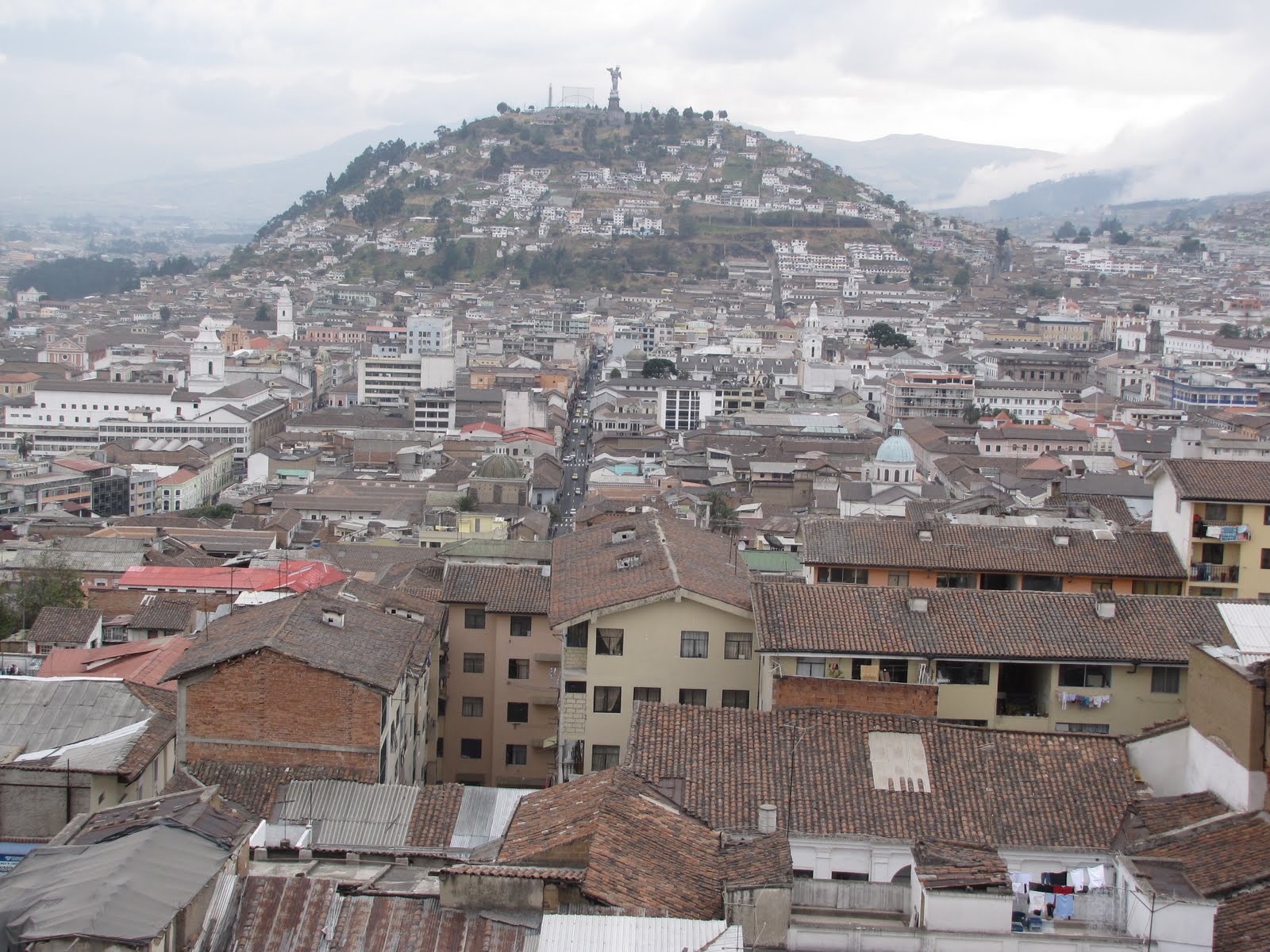
A view of Quito from Basilica del Voto National
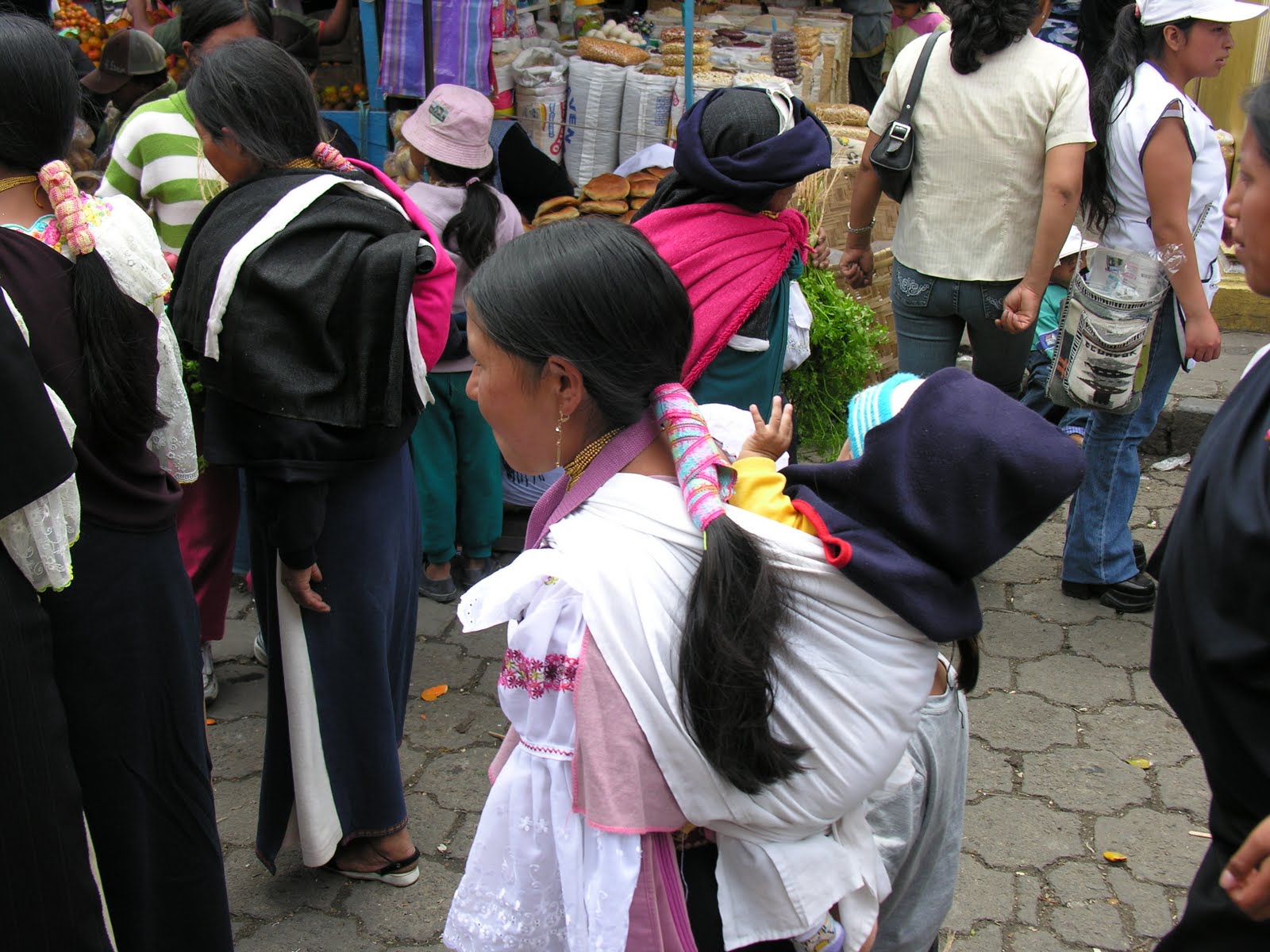
I’ve observed that Ecuador’s culture is as complex and as diverse as its natural environment, sometimes seeming to be locked in a push-pull struggle for dominance. From what I’ve seen of this small country, her cultures intermingle, sometimes to a smooth blend, while other times each culture appears to be striving to maintain its own identity and history, to hopefully map a path into the future. Quito particularly is a clear example of this; from the North’s modern high rises to the Old Town (Centro Histórico) colonial architecture, suit clad professionals walking beside traditionally-dressed indigenous women with baskets or babies strapped to their backs, each day presents these contrasts.

EstherWambui/Photos
An Otavaleña walks through the market.
Notice her style - hair, necklace, blouse and skirts of those in front of her.
With a population of more than 13.7 million (UN, 2010), Ecuador is a multiethnic and multicultural nation, its culture mirroring the demographics of the country itself, a rich amalgamation of various ethnic influences. Like much of South America, Ecuadorian culture blends the influences of Spanish colonialism with the resilient traditions of pre-Columbian peoples.

Ecuador’s largest ethnic groups are the Mestizos (those of mixed Spanish and Amerindian ancestry) and constitute just over 65 per cent of the current population. Amerindians are second in numbers and account for approximately a quarter of the population. Whites are mainly Creoles, unmixed descendants of Spanish colonists, and form 7 per cent of the Ecuadorian population. A small minority of Afro-Ecuadorians, about 3 per cent, constitute the remainder (Ecuador.org).

Esther Wambui/Photos
A Tsáchila guide takes us through
the traditions of the tribe.
Thus, it goes without saying that the national culture is also a mixture of both European and Amerindian influences, infused with various other elements inherited through the descendants of the country’s African slaves. In addition to the national culture, many of the existing indigenous communities also practice their own native cultures and nowhere is this more visible than in Catholicism, their main religion.

Due to Ecuador´s compact size but diverse nature, one can experience a number of these various, distinct cultures within a day. Travelling just a few hours on the road brings you to entirely new communities with their own customs. For example, two and a half hours drive gets me to Otavalo, the most fascinating handicraft market I’ve ever been to, where indigenous Otavaleños, by their distinctive dress and crafts, proudly showcase traditional Ecuadorian culture. Another three hours from Quito to the West of the Andes takes me to Santo Domingo, home to the Tsáchila, an ethnic tribe whose men dye their hair red (like the Maasai of East Africa). A few more hours’ drive from Santo Domingo gets you to Esmeraldas, the north-western part of Ecuador, where majority of the people are Afro-Ecuadorians.

As you can see, my work is cut out for me and for the next few weeks, maybe months, I’ll serve piecemeals of Ecuador; Its peoples, their dress, food, religion, customary beliefs, attitudes, goals, and values that make this wonderful country what it is today - a place I’m enjoying living in.

Monday, October 3, 2011

Relearning old habits, in and around Quito

Buenos dias, Buenas, Hola, are words casually thrown your way as you walk around Quito, often times not within the city, but around it. Come to think of it, this may not be as casual since greeters always spare moments to catch your eye. The complete opposite of Toronto, where one of the first lessons I learnt was to as much as possible avoid eye contact with strangers.

So, here I’m in Quito, learning again how to greet strangers, and even go further with new acquaintances where a double peck on the cheek is the norm. I lost this great way of connecting with strangers after immigration. Torontonians are generally very physically distant. They might shake your hand and occasionally give you the curt smile, and will probably go further and say a word or two if you’re walking a pet or carrying a baby. Even neighbours often opt for the wave.

Here I’m Afro, yeah that’s what Ecuadorians call black people and people of African descent. I really like the title because it sounds so relevant and even more so for the fact that I now mostly spot an afro, as I haven’t yet found someone to braid my hair. I also haven’t seen a single Afro with permed hair!

Last week, I attempted my first bus ride into Quito, alone, and none of the people I know thinks that was a good idea. Apparently there are as many pickpockets as there are passengers, if that’s even possible. At this I tell people that I’ve been through the “School of Life of Nairobi, Durban and Johannesburg” and can generally apply safety measures. The buses are pretty clean, very inexpensive (USD 0.25 for a single ride) and the music played at a normal volume. What worried me was the break-neck speed the bus travelled at, through the snaky, winding hills.

Interestingly although unspoken, in many cases it’s okay to be late, fashionably late at least. And while making an appointment, I’ve learnt to ask, “Three o’clock normal time or Ecuadorian time?” It’s like that “African time” thing.

Here, guys are not discreet about admiring a woman. Though annoying, I’m not bothered any more when guys hoot or whistle at me. It means they are appreciating what they see. It’s very cultural. I recently complained to my 60 year old friend about this habit, and her comment was, "enjoy the attention, it stops".

Unbelievably, people here still do ask for and get rides from strangers. Although I’ll not be accepting any such rides, it’s nice to see that in a city that is not left out of crime circles, some amount of trust still remains.

I know now that although this is a very free society, it is also very formal in an odd way. Titles are very important here. If you’re not addressing people in relation to their marital status (senor, senora, senorita), then it’s always their education. We have that in Kenya too particularly with doctors/professors. The difference here is that even lawyers, journalists and architects go by their titles. And when you look deep into this, it’s a carryover habit from colonial times thus a big class marker.

Remember lunch hour[s] for workers, I lost that in Canada where lunch hour is either half hour or 15 minutes often spent eating at your desk. The lunch hour in Quito runs anywhere between one to two hours, this seems to me like half a day. But, this is a downside when you are being attended to and those serving you expect you to take a break as well. For instance, that same day I took a bus into Quito, I was going to have some paper work done. Come 12:30 PM, the guy serving me looked at his watch, said it was lunchtime and I should come back after two hours. He only needed 10 minutes more to finish with me and I couldn’t persuade him to delay lunch.

Of all my re-education, I am particularly glad that this is a rather relaxed, laid back culture - no rush except with drivers. This is very meaningful to me because although I am not a nervous person, my family has complained that since emigrating, I have become a tad bit “uptight and rushed”. Like excess weight, this is a description I seriously want to shed, and thus as I go along, I’m working to adopt and enjoy the Ecuadorian pace.

Friday, September 16, 2011

Introducing Ecuador, My New Home

Today I didn’t call anyone since the electronic voice declared me short of tarjeta or “air time”. Instead I spent the day catching up on tasks that were long overdue, although I somehow couldn’t put in more than an hour to improve my seriously deficient Spanish. It has been an uneventful day, unlike the week, or indeed the past month since I made the move to Ecuador [for reasons that I’ll be getting into later]. For now, let me introduce you to this place that I hope to make my home for some time.

Yesterday in a routine conversation with a friend, I learnt that when she hired her new domestic help, the woman wanted to know where “her special utensils” were and in what room she was expected to eat her lunch, since with her previous employers she was not allowed to share these. Later, I went to a meeting in one of Quito’s “most secure neighbourhoods” where my friends had their car broken into, in broad daylight. During the same meeting, an acquaintance used a popular quote to warn me of road dangers here. Apparently, "Ecuadorian cemeteries are filled with people who had the right of way".

The day before, an acquaintance showed up for a meeting 40 minutes late and as he took his seat, all he said to us was, “buenas tardes”. No apology or regret. As with Kenya’s “hakuna matata”, things in Ecuador get done, in their own time, “Manana, Manana, sin falta”. As if that was not enough for the day, a driver in front of us held the traffic for about 5 minutes because he decided to buy lottery tickets from a street vendor.

Last weekend 11 USDs gave me four bags full of fresh, juicy, tropical and exotic fruit. I attended mass at an altitude so high my ears popped, and had supper in a room overlooking the magnificent Cotopaxi Mountain.


Map of Ecuador Courtesy of Fundacion Bolivar Education.

Three weeks ago, I straddled the globe as I stood at “la mitad del mundo” or the middle of the world and toured Cuenca, a charming and bustling city, a UNESCO World Heritage Site, also home to Ingapirca the most significant archaeological site in Ecuador.

From chilly Andean slopes to a humid amazon basin, and majestic snow-capped peaks that descend into beautiful beaches, Ecuador’s climatic and geographic diversity is simply astounding.

Come journey with me through Ecuador, a dazzling country of extraordinary contradictions. As I live and discover my new home, I hope you allow me the honour of taking you along with me. Although I have been coming here since 2008, this time round, I hope that I can get beyond the tourist eye and simple journalistic curiosity to reach a place where I can call this land, “my home away from home”.

Wednesday, September 7, 2011

Mida Creek, a rare mangrove gem on Kenya’s coast

Whenever I mention that I’m from Kenya, the first thing most people want to know is if I’ve visited any animal park; Maasai Mara, Amboseli, Samburu, Nakuru, others even include Serengeti [which is in Tanzania]. I am also quick to add that we have beautiful beaches for the sun bummers. But until recently, I omitted a rare gem tucked right at the heart of the spectacular sandy beaches. This place is Mida Creek. I took a trip there earlier in the year and I was rather surprised that the place does not feature more prominently in what foreigner know about Kenya.

EstherWambui/Photos
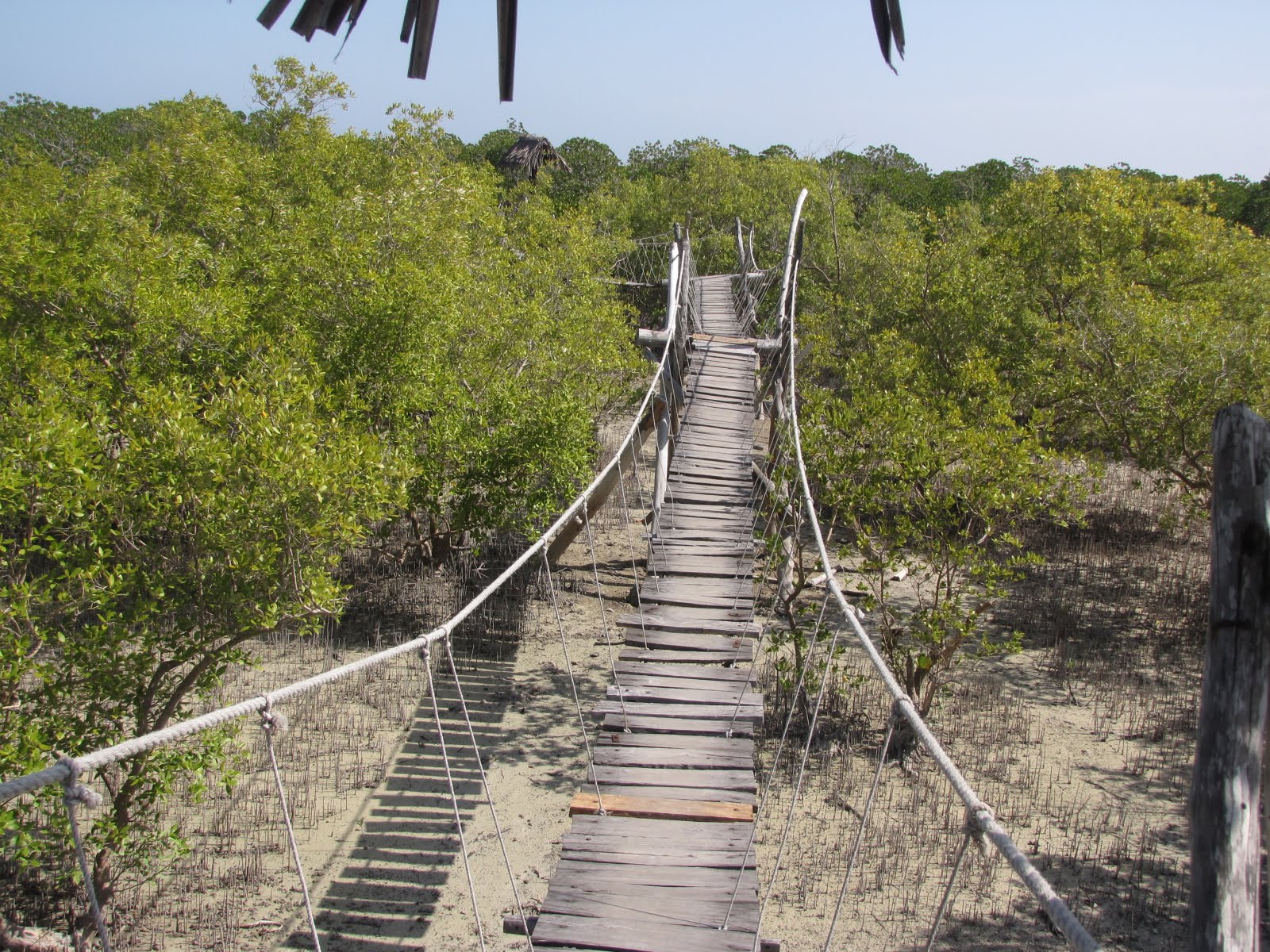
This 260m long suspended path allows
visitors a great view of the forest
To the east of Arabuko-Sokoke Forest and forming part of the same habitat, Mida Creek is one of Africa's largest mangrove creeks. Covering over 32 square kilometres, this tidal inlet forms part of a UNESCO Biosphere Reserve together with the forest. Situated between Kilifi and Malindi, the habitat provides an amazing opportunity to experience some of Africa's rarest wildlife and plants.

Designated an Important Biodiversity Area by NatureKenya, the forest and creek are linked by complex natural water flow systems, with the health of each habitat dependent on the other. This Creek is home to one of the most productive mangrove ecosystems on earth, a key stop-over and a significant feeding site for birds migrating from Europe, Asia and the Middle East to eastern and southern Africa. The birds feed on the variety of invertebrate food items buried in the muddy sand flats at low tide and roost on the exposed sandbanks and on the mangroves at high tide.

The best time to visit is late afternoon, ideally when this coincides with an incoming tide and a breadth-taking sunset.

After getting our tickets we were directed to the mangrove boardwalk (in itself worth a visit), an impressive structure made from a series of suspension bridges on steel ropes leading 260 metres through the mangrove canopy and ending at an elevated bird hide. Beware if you’re of a nervous disposition! Mida Creek is an excellent bird watching area, where a great variety of birds can be seen including waders, kingfishers and crab plovers.

EstherWambui/Photos
Heading out into the Creek in our canoe
Traditional dugout canoes, Arabic dhows and motorboats are used for bird watching, water skiing, fishing, relaxing boat cruises and sundowner trips on the Creek. We took our trip on a traditional canoe, guided by a thoroughly entertaining and informative “Captain Sulubu”. We rode out to Sudi Island to await the sunset and docked somewhere along the way to plant a few mangrove seeds; our simple contribution to the preservation of this uniquely amazing place.

Beyond the mangroves, beneath the open waters of the creek are submerged sea grass beds and coral reefs. These support a rich variety of marine organisms and fish spawning grounds, a vital source of food for wildlife and people alike. Although people no longer live inside Arabuko-Sokoke Forest, a large population of mostly Giriama people now live around the forest boundary. Most of these people are subsistence farmers, growing enough maize, cassava and beans for themselves and their families

Sadly, many threats face the forest and creek. Every day, timber and other natural resources are removed, often illegally, by local people as a means of earning money, largely to support their children's education. The creek habitats too are threatened by over-fishing, over- extraction of groundwater and over-harvesting of mangrove poles.

To counteract this damage, ASSETS (Arabuko-Sokoke Schools and Ecotourism Scheme), a programme managed jointly by A Rocha Kenya and the ASSETS committee, offers a creative solution to respond to the needs of local school children. They do this while encouraging community support for the protection of the largest remaining area of East African coastal forest.

EstherWambui/Photos
The magnificent Mida Creek sunsets
alone are worth the visit
ASSETS distributes funding from Eco-tourism to provide bursaries (scholarships) for secondary school children who would otherwise be unable to afford school fees. The ASSETS programme encourages the local people to value the forest and creek by equally distributing the benefits from eco-tourism throughout the local communities.

It is worth mentioning that at Mida Creek, I met the most respectable, honest, professional and friendly people of any touristic place I have been to in Kenya.

~With information from ASSETS-kenya.org and many thanks to Conservation Assistant Alex Thoya~

Thursday, July 21, 2011

In Africa, Let Charity Begin at Home

The African/Horn of Africa/East Africa/ Somali drought/famine is in the headlines although so far news writers here seem unsure of what to call that region. Still, we give more priority to JLo-Marc Anthony's divorce, the heat wave currently baking most of North America, European debt crises, the possibility of the U.S defaulting on its debt, and of course, how that will affect the global economy.

Here in Canada, a Royal Bank report suggests that Canadians are tightening their belts so they can handle rising consumer prices particularly for gas and food -29.5 per cent and 4.2 per cent in May respectively. Although this is nowhere near the 240 per cent increase in food prices seen in Somalia in the last month, it's nonetheless quite significant.

It comes as no wonder then, that some comments about the East African drought are less than pleasant. From relatively reasonable readers calling on rappers to give up their bling and feed their kin, to “oh not again, haven't we been feeding them long enough already”, to “if they can pop out so many kids they should have the means to feed them”, to the downright ignorant who say that those people should "put everything on their credit card like we do here and pay it off later".

The catastrophe and its consequences then gets on the news lineup yet can’t quite make the headlines. The rare times the story leads, it involves some Westerner, head or spokesperson of this or other NGO addressing a news conference regarding the drought.

Map of Africa
Courtesy of Africaguide.com
Simply said, donor empathy is at its lowest. People are dealing with enough of their own problems and feel that "those" people should already be self-reliant.

But to be fair, there are lots of Good Samaritans out there including the Somali community here; MDs, “Friends of Somalia”, and Canadian Somali youth have been actively involved in raising funds or sending help any way they can to their countrymen in Africa.

With all due respect, I acknowledge the many factors that have brought the situation to where it is today. War/insecurity, an endemic cycle of poverty, corruption, mismanagement and misappropriation of funds particularly by local governments and the biggest one in this case the failure of rain. Simply put, these agriculturalists and nomadic pastoralist communities rely mainly on rain, and it has barely rained in the last two years.

So what has brought about this donor apathy? Here is what I think: It's just been so many years of donating without show of good result. The truth is, there is lots of good/positive result, but you have to be on the ground to see it. The failure of the media and the strategy of NGOs to mainly only air desperate images, continues to feed the society with the wrong image, an image of people who are endemically needy.

Donors rush to aid people and countries affected by natural disaster. But in this case, the disaster is clouded over by insecurity and a war that has gone on too long. Meaning that people see it as a disaster brought on by human [in]action. The world has just about ignored Somalia for the last twenty years and there is no sign this will change any time soon.

Most importantly, donors in the West can now observe what is going on out there. Although there’s still a lot of ignorance about Africa, the internet and social media has tremendously helped the curious see beyond the cleanly edited mainstream media images. Some now know that Africa is made up of many countries – 54 including the new South Sudan. They also know that not all those people and nations are dirt poor. So what they and I want to know is: “Where is the rest of Africa?” What are they doing to ease the burden of hunger on their drought-stricken brothers and sisters?

Southern, West, North, Central and the rest of East Africa, could we see you act? You may not have much, but you could spare some to save lives, especially those of children who may not last till the next bag of corn arrives from abroad. After all, it’s you who teach the same children that “Charity begins at home”. Or does it?

Wednesday, July 6, 2011

Give me an education, hopefully I'll afford a pair of shoes in future

Having a pair of shoes to wear to school for some children in Kenya is a privilege. For others, particularly in urban and semi-urban regions, regardless of social standing, it's rather understood that a school uniform includes shoes. But for some poor pupils and parents, the clothes make the uniform and that's that. Shoes, if available are a bonus; coming in all types, form and colour. It's not uncommon for pupils to go to school in patipatis [slippers].

A few years ago, it was that if you didn't afford shoes, you didn't go to school. This was because although unaffordable to some, shoes were still way cheaper than the cost of primary education. But with President Mwai Kibaki's landmark initiative to provide free primary education to every Kenyan since 2003, an additional 1.5 million children were reported to have enrolled in school for the first time.

Kenyans value education and will pursue it as long and as high as they can. So over the last few years, parents tolerated an influx in pupil enrolments, including some adult ones who only wanted to finally write/spell their names. Kenyans stood by as pupils out-numbered teachers and education standards fell to record lows. Books and teaching materials became scarce. Those with some cash to spare enrolled their children into the ever increasing private academies. The best teachers left their public employ for a more lucrative pay with the private sector. Still life seemed to be good.

Then, the beast that seems to stalk Kenya's Public Sector struck again. News media started reporting of yet another corruption scandal, this time at the Ministry of Education. A government audit revealed that over 4.2 billion shillings had disappeared from the Ministry. Embezzled!

As it stands now, the minister and permanent secretary at that ministry of Education have refused to resign. But, I’ll not go into corruption and its notoriety in Kenya. Instead, let me show you what theft, misuse and misappropriation of these funds has denied and will continue to deny Kenya's neediest pupils.

EstherWambui/Photos

I met these kids when I visited their school in Kibera a while back. When I see the innocence, beauty and hope in their eyes, I want to back our public officials into a corner and demand to know how they can continue with such impunity.
EstherWambui/Photos


I was in a bus touring Kilifi recently when I saw these pupils going home from school for lunch. In such scorching sun, I was really saddened by the fact that in this day and age, majority walked shoeless.